Neuro Recall Editorial Standards: How Every Page Is Written and Checked
Quick answer
Every Neuro Recall page starts from the bottle label and the Supplement Facts panel. Health statements link to public sources we opened and read, such as NIH fact sheets. Missing facts are marked as not published. We never invent reviews, ratings, prices or doctors, and every correction moves the page's date forward.
Which sources do we trust, and in what order?
The bottle comes first, then public health agencies, then published research. When two sources disagree, the higher one in the table wins and the page says so.
Each source does a different job. The label tells us what is in the capsule; agencies and reviews tell us what is known about each ingredient; the seller pack tells us the buying terms.
| Rank | Source | What we use it for |
|---|---|---|
| 1 | Front label and Supplement Facts panel | Product name, serving, amounts, the blend total and the ingredient list |
| 2 | Back label | Directions, warnings, storage and the FDA statement |
| 3 | Public health agencies (NIH, NCCIH, NIA, FDA, FTC) | Safety limits, interactions and what the law requires |
| 4 | Systematic reviews and trials | What an ingredient did, at what dose, for how long and in whom |
| 5 | Expert foundation and cancer center pages | Extra detail, always labeled as not a government source |
| 6 | Brand graphics | The brand's own claims, quoted as marketing, never as proof |
| 7 | Seller pack | Contacts, returns address and refund timing |
For example, we quote the label's 600 mcg DFE for folate exactly as printed, and we use the NIH fact sheet only to explain the upper limit (NIH ODS, Folate (health professional)).
How do we word health claims about Neuro Recall?
We describe what was studied, not what the product does. Only facts printed on the label are stated plainly; the brand's claims are quoted as the brand's words, and gaps are named.
- On the label
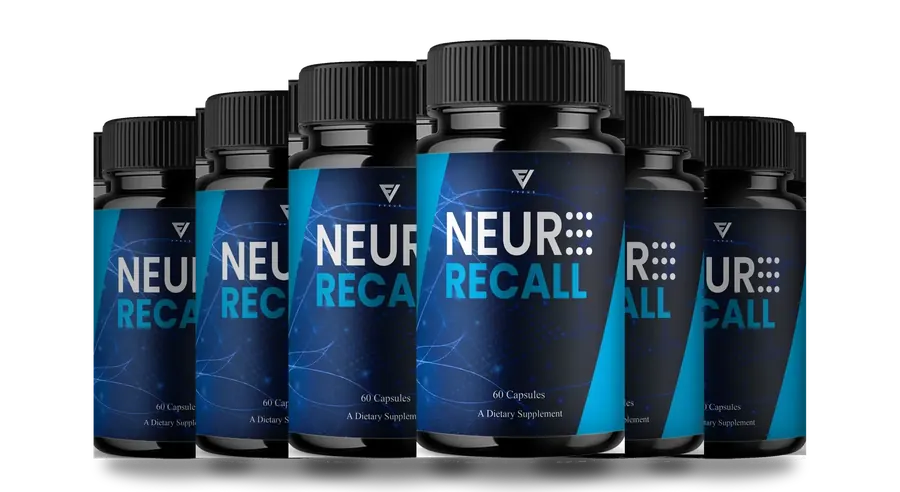
60 Capsules, A Dietary Supplement
Front labelPrinted on the bottle, so we state it as fact.
- Marketing only
Promotes mental clarity and focus
Brand graphicQuoted as the brand's words, with the FDA statement beside it.
- Marketing only
Supports cellular function and healthy aging
Brand graphicNo test of this product backs it, so we never repeat it as a result.
- Not shown
Amount of bacopa per serving
Supplement Facts panelOnly the 635 mg blend total is printed. We write not published and never estimate it.
| We avoid | We write instead | Why |
|---|---|---|
| Improves or restores memory | Studied for memory in small, early trials | No trial of Neuro Recall exists |
| Clinically proven | Tested alone, at a known dose | Ingredient studies do not test this formula |
| Doctor approved | Medical reviewer slot, filled after a real review | No review has happened yet |
| Treats memory loss | Not a treatment for memory loss or dementia | That would be a drug claim |
The FDA treats a product meant to treat or prevent a disease as a drug, even if it is labeled a supplement (FDA, FDA 101: Dietary Supplements). The FTC says randomized, controlled human trials are the most reliable support for a health claim (FTC, Health Products Compliance Guidance).
What happens before a page goes live?
Each page passes five checks, in order. A page that fails one goes back to the start of that step, not to the end of the line.
- 1
Draft from the label
Every amount, serving and warning is copied from the panels, word for word where it matters.
- 2
Source check
Each health statement gets a link we opened, and the dose and group studied must match it.
- 3
Caution check
Medicine, liver and pregnancy notes appear once, clearly, where a reader will see them.
- 4
Gap check
Prices, the guarantee length and blend amounts are marked not published or "see checkout".
- 5
Date and publish
The page carries the date it was checked and the medical reviewer slot.
How we cite a study
- We cite only pages we opened and read. A page that would not load is left out, not cited from memory.
- Each citation names the dose, how long the study ran and who took part, when the source gives them.
- Foundation and cancer center pages are marked as expert reviews, not government sources.
- We give the date printed on the source page, not the date a server reports.
The cautions follow the order of risk in our sources. The full list sits on the Neuro Recall side effects page.
How do we handle reviews, ratings and photos?
We show only reviews the order desk has matched to a real order. The seller's sample reviews, star score and order counts could not be verified, so they are not on this site.
- A review slot stays highlighted and empty until a buyer is matched to an order.
- Critical reviews get the same space as happy ones.
- Photos of people from the brand's materials are labeled as illustration, with no name, age, city or quote.
- We never write a star score ourselves; our editorial score is labeled as our view.
The full method is on the Neuro Recall reviews page.
How are errors corrected?
Write to [email protected] with the page and the problem. We check it against the source, fix the page if we were wrong, and move the page's date forward.
Tell us
Send the page address and what looks wrong to [email protected]. The inbox is read Monday to Friday, 9:00 am to 5:00 pm ET.
We check
We reopen the label or the source. If the source says something different from the page, the source wins.
We fix and date it
The corrected page shows a new date. A change to a health statement also goes back through the caution check.
Small fixes, such as a typo or a broken link, are made without a note. A change to a dose, a caution or a source is a correction, and it always moves the page date.
Order questions do not belong in this inbox; the Neuro Recall contact page lists the order desk.
Who pays for this site, and does it change what we write?
Neurorecallmemory, a USA Authorized Retailer, pays for the site and earns money when readers order. That does not buy a softer caution, a missing source or a claim the evidence cannot carry.
If the brand or the order desk asks for a change, we treat it like any reader's note. A change is made only when the label or a public source supports it, and the page date moves forward the same way.
We are a seller, and we say so on every page. The about page explains who runs the site and how it earns.
Editorial standards: frequently asked questions
How does the Neuro Recall Editorial Desk check facts?
Every fact is checked against the bottle, the two label panels or a public source we opened and read. If none of those holds the fact, the page says it is not published.
Why do some Neuro Recall pages say "not published"?
Because the brand has not made that fact public, for example the amount of each blend ingredient or a lab report. We mark the gap rather than fill it with a guess.
Why does this site never claim that Neuro Recall improves memory?
Because no study has tested Neuro Recall, and ingredient studies cannot stand in for the formula. The FTC says health claims need competent and reliable scientific evidence.
Can a brand or seller pay to change what you write?
No. The site earns money when readers order, but no one can buy a change to a health statement, a source or a caution.
Why do you cite foundation and cancer center pages as well as government ones?
Some ingredients have little government coverage. We use those pages when they add detail, and we say they are expert reviews, not government sources.
How do I report a mistake on a Neuro Recall page?
Write to [email protected] with the page address and what looks wrong. If we agree, we fix the page and move its date forward.
How often are Neuro Recall pages updated?
There is no fixed timetable. Each page shows the date it was last checked, and any change to a fact moves that date.
Page check
Written by
Writes and fact-checks every page against the Supplement Facts panel, the back label and public health sources.
Medically reviewed by
Dr. Neelum Aggarwal, MD, Physician
Medical reviewer. Review date: October 12, 2026.
- Last checked October 11, 2026
- Facts from the bottle, the sales page and the sources cited above
- Found an error? Write to [email protected] or read how we check facts