Neuro Recall Ingredients: All 14, the Doses Studies Used, and What the Blend Leaves Out
Quick answer
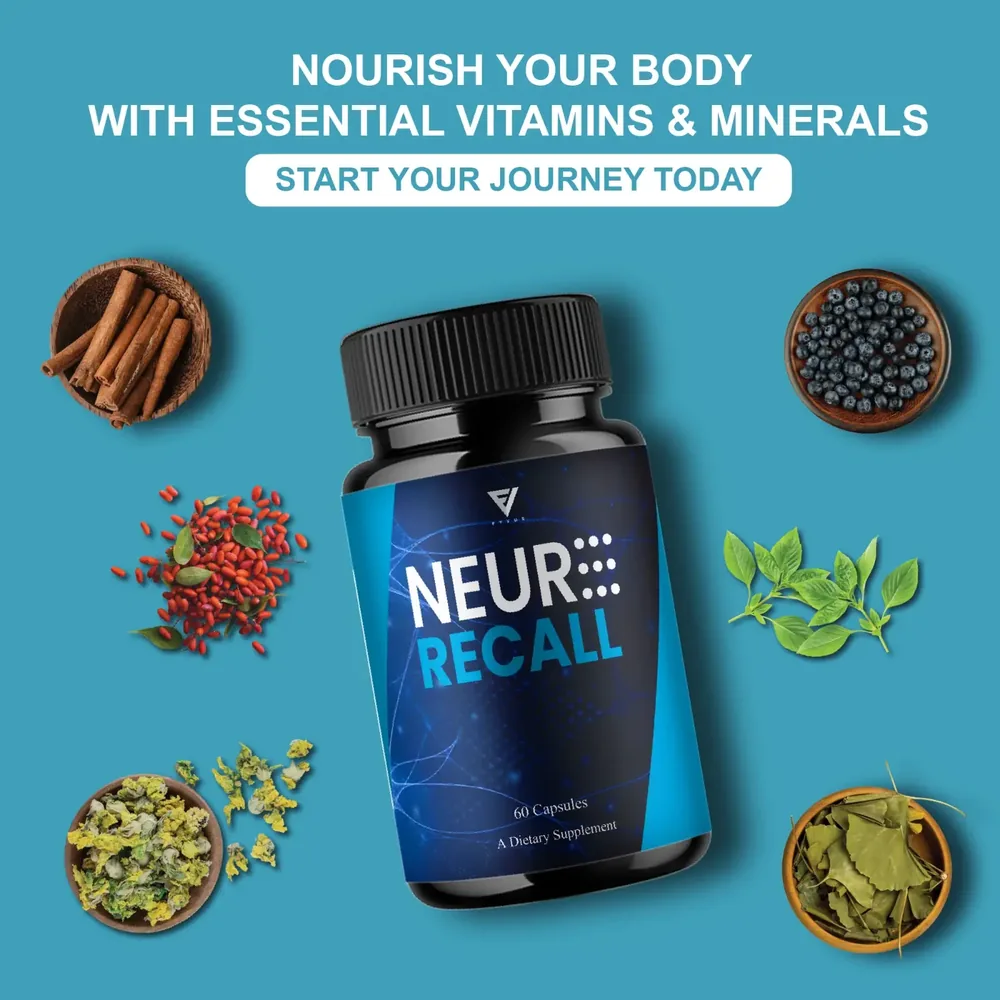
Neuro Recall lists 14 ingredients. Folate, vitamin B12, magnesium and chromium carry exact amounts. Ginkgo, bacopa, L-theanine, alpha-GPC, green tea extract, berberine, cinnamon, bilberry, alpha lipoic acid, and lutein with zeaxanthin share one 635 mg blend with no single amounts. A few have small, early studies; several have none for memory.
What are the 14 ingredients in Neuro Recall?
Neuro Recall lists 14 ingredients. Four vitamins and minerals carry exact amounts. The other ten share the 635 mg WMG-NVT Exclusive Blend, with no amount for any of them.
| Ingredient | Amount per 2 capsules | Memory evidence in one line |
|---|---|---|
| Folate (as folic acid) | 600 mcg DFE (320 mcg folic acid) | Helps when someone is low, not when levels are normal |
| Vitamin B12 | 240 mcg | Same: matters when someone is low |
| Magnesium (oxide) | 250 mg | Too few trials to say |
| Chromium (picolinate) | 120 mcg | One small trial in 26 older adults |
| Cinnamon bark extract | not published | No human memory studies |
| Ginkgo biloba leaf extract | not published | Large trial found no less decline |
| Bilberry fruit extract | not published | No memory evidence found |
| Bacopa monnieri (20% bacosides) | not published | Small trials, modest gains |
| Green tea leaf extract (50% EGCG) | not published | Data mostly from tea with caffeine |
| Berberine HCl | not published | No human memory studies |
| L-theanine | not published | Short-term attention in healthy adults |
| Alpha lipoic acid | not published | No usable dementia trials |
| Alpha-GPC (GPC choline) | not published | Studied only in people with dementia |
| Lutein and zeaxanthin (marigold) | not published | Brain-scan changes, not clear memory gains |
FDA rules ask a blend to list its ingredients from most to least by weight (FDA, Dietary Supplement Labeling Guide, Ch. IV). Order hints at size, but it gives no number.
Which ingredients have their own page?
Eight ingredients get a full page with trials, doses and side effects. Tap a name for the short version.
B vitamins
Vitamin B12 and folate
Low B12 can cause memory loss and needs a doctor. Extra B vitamins did not help people with normal levels.
Studied at: About 500 to 1,000 mcg B12 and 400 to 2,500 mcg folic acid a day.
Read the Vitamin B12 and folate pageMineral, 250 mg
Magnesium
Memory trials are too few to judge. The oxide form can loosen stools.
Studied at: No memory dose; the supplement upper limit is 350 mg a day.
Read the Magnesium pageLeaf extract
Ginkgo biloba
A six-year trial in older adults found no less decline than placebo.
Studied at: 240 mg a day in the GEM trial.
Read the Ginkgo biloba pageWhole-plant extract
Bacopa monnieri
Small trials in healthy adults found modest gains in attention speed and recall.
Studied at: 300 to 450 mg a day for 12 weeks or more.
Read the Bacopa monnieri pageLeaf extract
Green tea extract
Memory data mostly involve tea with caffeine. Extracts are a rare cause of liver injury.
Studied at: 9 to 300 mg of EGCG a day.
Read the Green tea extract pagePlant compound
Berberine
Studied for blood sugar, not memory. It interacts with several medicines.
Studied at: 250 to 500 mg two or three times a day.
Read the Berberine pageAmino acid from tea
L-theanine
Short trials found small gains in reaction time and attention.
Studied at: 50 to 400 mg, often 200 mg.
Read the L-theanine pageCholine compound
Alpha-GPC
Studied only in people who already had dementia.
Studied at: 1,200 mg a day.
Read the Alpha-GPC page
Thinking about Neuro Recall? Check today's packs on the official order page.
Money-back guarantee · Tracked US shipping · Secure checkout.
Do the Neuro Recall amounts match the doses used in studies?
Only B12 and folic acid can be checked, because only they have a printed amount. Every blend ingredient shows an empty bar.
Label: 240 mcg. Studied: about 500 to 1,000 mcg a day in trials (helps only when someone is low). (NIH ODS, Vitamin B12 (health professional)) (Cochrane, Folic acid with or without B12 for cognition)
Label: 320 mcg (600 mcg DFE). Studied: about 400 to 2,500 mcg folic acid a day in trials. (NIH ODS, Folate (health professional)) (Cochrane, Folic acid with or without B12 for cognition)
Label: not published. Studied: 240 mg a day (GEM trial, about 6 years). (JAMA 2009, Snitz et al., GEM cognitive decline trial)
Label: not published. Studied: 300 to 450 mg a day for 12 weeks or more. (J Ethnopharmacol 2014, Bacopa meta-analysis of RCTs)
Label: not published. Studied: 50 to 400 mg, often 200 mg, short term. (Nutr Rev 2025, Payne et al., tea and L-theanine meta-analysis)
Label: not published. Studied: 1,200 mg a day, only in people with dementia. (Alzheimer's Drug Discovery Foundation, Alpha-GPC)
Label: not published. Studied: 10 mg + 2 mg a day for 12 months. (Nutrients 2021, Yagi et al., Lutein and brain health)
Label order caps each amount too. If the blend follows the FDA rule above, bacopa, listed fourth, can be at most about 159 mg, a quarter of the blend. L-theanine, seventh, tops out near 91 mg, and alpha-GPC, ninth, near 71 mg.
Chromium in Neuro Recall: what it is, the dose and the evidence
Chromium is a trace mineral. Neuro Recall gives 120 mcg as chromium picolinate, 343% of the 35 mcg Daily Value. Deficiency has not been reported in healthy people (NIH ODS, Chromium (health professional)).
- Label amount
- 120 mcg (chromium picolinate)
- Studied for memory
- One 12-week trial in 26 older adults; dose not on the record we read
- Studied for blood sugar
- Chromium picolinate, including 1,000 mcg a day
- Upper limit
- None set
In that memory trial, chromium did not improve learning rate or retention, but it reduced interference on some memory tasks (Nutr Neurosci 2010, Krikorian et al., Chromium and cognition). One small study is not a pattern. For blood sugar, NCCIH calls the evidence weak and inconclusive (NCCIH, Diabetes and Dietary Supplements).
Cautions
NIH links no harm to high intakes, but data are limited. It notes case reports of kidney and liver problems, and says chromium with insulin or diabetes pills could raise the risk of low blood sugar (NIH ODS, Chromium (health professional)).
Cinnamon bark extract in Neuro Recall: does it help memory?
No human study has tested cinnamon for memory. Neuro Recall lists it first in the blend, with no amount and no word on the type.

Only lab and animal studies link cinnamon to the brain (Alzheimer's Drug Discovery Foundation, Cinnamon). Human trials tested up to 6 grams of cassia a day, for blood sugar, not memory.
NCCIH says it is unclear whether cinnamon supplements help diabetes or weight loss (NCCIH, Cinnamon: Usefulness and Safety).
Cautions
Cassia cinnamon contains coumarin, which has been linked to liver effects. Larger amounts of Ceylon cinnamon are considered unsafe in pregnancy (NCCIH, Cinnamon: Usefulness and Safety). With no type on the label, the coumarin content cannot be known. Cinnamon may also lower blood sugar, like chromium, alpha lipoic acid and berberine in the same capsule.
Bilberry fruit extract in Neuro Recall: is it good for memory?
No memory evidence for bilberry was found. NCCIH says it has not been clearly shown to help any health condition (NCCIH, Bilberry: Usefulness and Safety).
The best studies of the extract did not find it improves night vision in healthy people, and the NCCIH page does not discuss memory.
The only dose data come from safety studies: fruit extracts up to 160 mg a day for up to 6 months.
Cautions
The fruit is safe in food amounts. Little is known about larger amounts in pregnancy or breastfeeding, and the label already says not to use it then.
Alpha lipoic acid in Neuro Recall: evidence and blood sugar
Alpha lipoic acid (ALA) is an antioxidant with no memory trials in healthy people. Cochrane found no dementia trials that met its rules and said ALA cannot be recommended for dementia (Cochrane, Alpha lipoic acid for dementia).
- Studied dose
- 600 to 900 mg a day, up to 2 years, mostly in Alzheimer's
- Share of the blend
- 600 mg would be about 94% of the whole blend
- Memory evidence
- None showing prevention or benefit
A research foundation found no clinical studies suggesting ALA prevents dementia or improves thinking (Alzheimer's Drug Discovery Foundation, Alpha Lipoic Acid). For blood sugar, a 2019 review found it no better than placebo.
Cautions
High doses can cause low blood sugar and may add to diabetes drugs. Nausea, vomiting and indigestion are reported, and ALA may work against chemotherapy and radiation (Memorial Sloan Kettering, Alpha-Lipoic Acid (About Herbs)). Pregnancy data are lacking.
Lutein and zeaxanthin in Neuro Recall: what studies show
Small trials found brain-scan changes in older adults, not clear gains on memory tests. Neuro Recall gets these yellow plant pigments, also found in leafy greens, from marigold flower extract.

A 2021 review found nine small brain-imaging studies. Four were trials of 44 to 50 people, each giving 10 mg lutein plus 2 mg zeaxanthin once a day with a meal for 12 months (Nutrients 2021, Yagi et al., Lutein and brain health).
The authors warn the studies were few and all done in North America.
Dose and cautions
Up to 20 mg of lutein and 2 mg of zeaxanthin a day is not linked to safety concerns (Alzheimer's Drug Discovery Foundation, Lutein and Zeaxanthin). Unlike ginkgo or bacopa, the studied 12 mg could fit in the blend. Whether it does is not printed.
Which Neuro Recall ingredients need extra care?
Four checks matter most across the label.
| Check | Why | Source |
|---|---|---|
| Blood thinners, daily aspirin or NSAIDs | Ginkgo may raise bleeding risk | (NCCIH, Ginkgo: Usefulness and Safety) |
| Diabetes medicine | Berberine, chromium, cinnamon and ALA may lower blood sugar | (NCCIH, Diabetes and Dietary Supplements) |
| Liver warning signs | Green tea extract is a rare cause of liver injury | (LiverTox (NIDDK), Green Tea) |
| Pregnant or nursing | The label says do not use | Back label |
Every side effect is on the Neuro Recall side effects page, and each label line is on the Supplement Facts page.
Neuro Recall ingredients: questions people ask
How much of each ingredient is in Neuro Recall?
The label gives amounts for just four items: folate 600 mcg DFE, B12 240 mcg, magnesium 250 mg and chromium 120 mcg. The other ten share 635 mg with no single amounts.
Does chromium help memory?
There is little to go on. One 12-week trial in 26 older adults found less interference on some tasks but no better learning.
Is 120 mcg of chromium safe?
No upper limit is set, though data are limited. Ask a doctor first if you have kidney or liver disease or take diabetes medicine.
Does cinnamon help memory?
No human study shows it. Research on cinnamon and the brain is limited to lab and animal work.
Is cinnamon extract safe for the liver?
It depends on the type. Cassia contains coumarin, which has been linked to liver effects, and this label does not name the type.
Is bilberry good for memory?
No memory evidence was found, and NCCIH says bilberry is not clearly shown to help any condition.
Does alpha lipoic acid help memory?
No study shows it. Cochrane found no usable dementia trials.
Can alpha lipoic acid lower blood sugar?
High doses can, and it may add to diabetes drugs. Ask your doctor first if you take one.
Is lutein and zeaxanthin good for the brain?
Possibly, but the proof is thin: small trials showed brain-scan changes, not clear memory gains.
How much lutein and zeaxanthin should I take daily?
Trials used 10 mg lutein plus 2 mg zeaxanthin a day. Neuro Recall does not print its amount.
Page check
Written by
Writes and fact-checks every page against the Supplement Facts panel, the back label and public health sources.
Medically reviewed by
Dr. Neelum Aggarwal, MD, Physician
Medical reviewer. Review date: October 12, 2026.
- Last checked October 11, 2026
- Facts from the bottle, the sales page and the sources cited above
- Found an error? Write to [email protected] or read how we check facts