Magnesium in Neuro Recall: 250 mg of Oxide and the 350 mg Limit
Quick answer
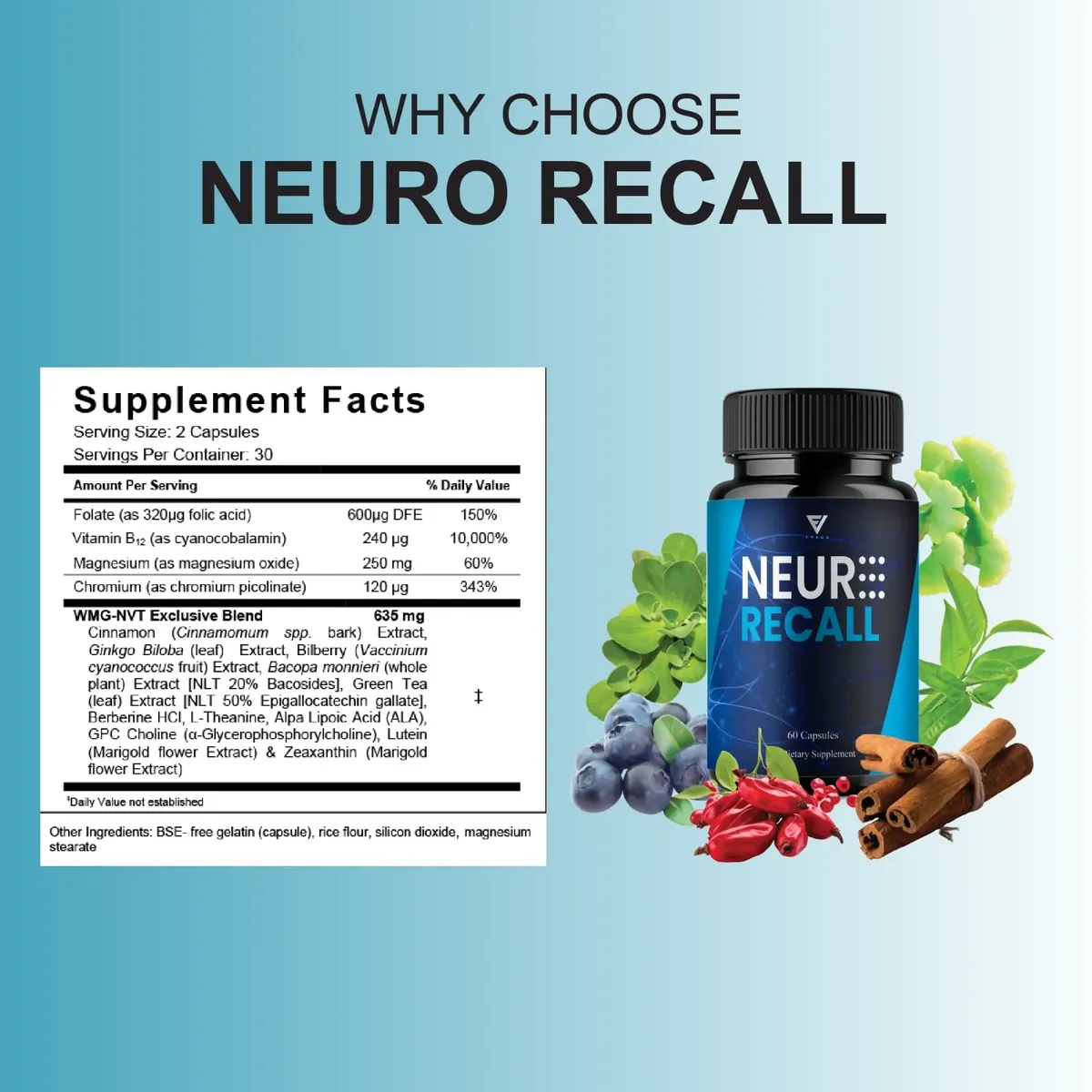
Each 2-capsule serving of Neuro Recall lists 250 mg of magnesium as magnesium oxide, 60% of the Daily Value. Memory trials of magnesium are too few to show a benefit. The adult upper limit from supplements is 350 mg a day, so the label's "or as needed" line matters: two servings would give 500 mg. Oxide is also a common cause of loose stools.
What is magnesium oxide?
Magnesium is a mineral the body uses in hundreds of processes. Magnesium oxide is one supplement form of it: magnesium bound to oxygen.
NIH says oxide is absorbed less completely than the aspartate, citrate, lactate or chloride forms (NIH ODS, Magnesium (health professional)). Neuro Recall prints its amount, so this ingredient can be checked, unlike the ten in the blend. All 14 are compared in the Neuro Recall ingredients guide.
- On the label
- Magnesium (as magnesium oxide), 250 mg, 60% DV
- Per
- 2 capsules, the full daily serving
- Daily Value
- 420 mg
- Upper limit from supplements
- 350 mg a day for adults
- Magnesium stearate
- A separate entry under other ingredients; the 250 mg line names oxide as its source
- Serving size: 2 capsules The 250 mg is for both capsules together, taken once a day.
- 250 mg Magnesium from magnesium oxide, the third line of the panel.
- 60% DV 250 mg against the 420 mg Daily Value.
- Magnesium stearate Listed under other ingredients, apart from the 250 mg line.
How is magnesium thought to support memory?
The idea is simple: nerve cells need minerals to work, and magnesium is one of them. So keeping a normal level is thought to support normal brain function.
That is a theory, not a finding. The NIH magnesium fact sheet has no section on memory or dementia at all (NIH ODS, Magnesium (health professional)).
Large studies that follow people over time add a twist. Both low and high blood magnesium were linked to more dementia and memory problems, a U-shaped pattern (Adv Nutr 2024, Chen et al., Magnesium and cognitive health). That shows a link, not that pills help, and it hints that more is not simply better.
Thinking about Neuro Recall? Check today's packs on the official order page.
Money-back guarantee · Tracked US shipping · Secure checkout.
What did studies of magnesium and memory find?
Too little to say it helps. A 2024 review pulled together 3 randomized trials and 12 cohort studies and found the trials were not enough to draw conclusions about supplements.
| Evidence | What it covered | What it found |
|---|---|---|
| Randomized trials (Adv Nutr 2024, Chen et al., Magnesium and cognitive health) | Magnesium supplements and thinking; doses not given in the record we read | Not enough to draw conclusions |
| Cohort studies, same review | Blood magnesium and intake over time | Low and high levels both linked to more dementia; association only |
| NIH fact sheet (NIH ODS, Magnesium (health professional)) | Uses, limits and safety of magnesium | No section on memory or dementia |
Because no trial set a memory dose, there is no studied dose to hold the 250 mg against. The authors of the review call for more trials.
Is one form better for memory?
People often search for glycinate, citrate or other forms sold for the brain. NIH ranks forms only by how well they are absorbed, with oxide behind aspartate, citrate, lactate and chloride. None of the sources we read shows any form improving memory, so a better-absorbed form is not proof of a better result.
Neuro Recall magnesium: label amount vs. the 350 mg limit
One serving gives 250 mg, under the 350 mg limit. The problem is the back label, which says to take 2 capsules daily "or as needed".
| Amount | Magnesium | Against the 350 mg limit |
|---|---|---|
| One serving of Neuro Recall (2 capsules) | 250 mg | 100 mg under |
| Daily Value | 420 mg | A label reference amount, not a target for pills |
| Upper limit from supplements and medicines | 350 mg | The ceiling |
| Two servings (4 capsules) | 500 mg | 150 mg over |
A day with the right amount
Press play to walk through one day. The gauge shows how many capsules you have taken; it should stop at two.
Gauge: capsules taken today (the label serving is 2). Dial: the time of day you picked.
Two capsules give 250 mg of magnesium. The label names no time of day, so pick one you will keep.
Magnesium in other supplements or medicines counts toward the same 350 mg daily limit.
"Or as needed" is not a second serving. Two servings would bring the day to 500 mg.
Loose stools are a known effect of oxide. Tell your provider rather than changing the dose yourself.
Bisphosphonates and some antibiotics absorb less well with magnesium. Your pharmacist can set the timing.
More timing tips are on the how to use Neuro Recall page.
Magnesium oxide side effects and interactions
The main side effect is the gut. High supplement doses often cause diarrhea, sometimes with nausea and cramps, and oxide is one of the forms most often reported to do this (NIH ODS, Magnesium (health professional)).
| Issue | What happens | What to do |
|---|---|---|
| Loose stools | Diarrhea, sometimes nausea and cramps | Keep to one serving; tell your provider if it continues |
| Bisphosphonates | Magnesium can lower how well these bone medicines are absorbed | Ask your pharmacist about spacing |
| Some antibiotics | Absorption of the antibiotic can drop | Ask your pharmacist about spacing |
| Other magnesium products | Adds to the same 350 mg limit | Count every source before you add one |
Other parts of the capsule can upset the stomach too, such as bacopa. The full list is on the Neuro Recall side effects page.
Who should avoid magnesium oxide or ask first?
Most healthy adults can stay within the limit on one serving. A few groups should pause first; this check stays on your screen and nothing is sent.
Magnesium fit check
Are you pregnant or nursing, or under 18?
Do you take another supplement or medicine with magnesium?
Do you take a bisphosphonate or an antibiotic?
Do you often have loose stools or a sensitive stomach?
Answer every question to see your result. Nothing is saved or sent.
No flags here. Keep to 2 capsules a day and count any new magnesium product toward the 350 mg limit.
Ask your doctor or pharmacist first, and bring the bottle so they can see the 250 mg line.
Skip Neuro Recall. The label says not to use it if you are pregnant or nursing, and it is sold for adults.
The folic acid in the same serving stays under its own limit even at two servings, as the B12 and folate page shows. Magnesium is the line that sets the ceiling.
Magnesium: common questions
Does magnesium help memory?
Not that research can show yet. A 2024 review found too few randomized trials to draw conclusions about magnesium supplements and thinking.
Which magnesium is best for memory?
No form has been shown to help memory. NIH says oxide is absorbed less completely than aspartate, citrate, lactate or chloride, but that is about absorption, not memory.
Can magnesium oxide cause diarrhea?
Yes. NIH names oxide among the forms most often reported to cause diarrhea, sometimes with nausea and cramps, when supplement doses run high.
How much magnesium is too much?
For adults, the upper limit from supplements and medicines is 350 mg a day. Magnesium from food does not count toward it.
Is magnesium oxide well absorbed?
Less well than some other forms. NIH lists aspartate, citrate, lactate and chloride as more completely absorbed than oxide.
Should I take magnesium at night?
The Neuro Recall label names no time of day, and our sources do not show that timing changes anything for memory. Pick one time you will remember and keep to one serving.
Does magnesium interact with medications?
It can. NIH says magnesium can reduce how well bisphosphonates (bone medicines) and some antibiotics are absorbed, so ask your pharmacist how to space them.
Can Neuro Recall be combined with a separate magnesium supplement?
Ask first. Neuro Recall already gives 250 mg, so only 100 mg is left before the 350 mg limit, and magnesium in medicines counts too.
Is 250 mg of magnesium a lot?
It is 60% of the 420 mg Daily Value and under the 350 mg supplement limit. It becomes too much if you double the serving.
Page check
Written by
Writes and fact-checks every page against the Supplement Facts panel, the back label and public health sources.
Medically reviewed by
Dr. Neelum Aggarwal, MD, Physician
Medical reviewer. Review date: October 12, 2026.
- Last checked October 11, 2026
- Facts from the bottle, the sales page and the sources cited above
- Found an error? Write to [email protected] or read how we check facts