Does Neuro Recall Work for Memory? 7 Label Dose Gaps
Quick answer
Judge Neuro Recall by its label: 2 capsules a day from a 60-capsule bottle that lasts 30 days. Each ingredient has research you can read, and some printed amounts differ from trial doses: B12 sits at 48% of the lowest trial dose, folic acid at 80%, and ten blend amounts are not published. A personal test backed by the money-back guarantee is the practical way to judge it. Compare each printed amount with the amounts used in research, because any gap matters when you judge the label.
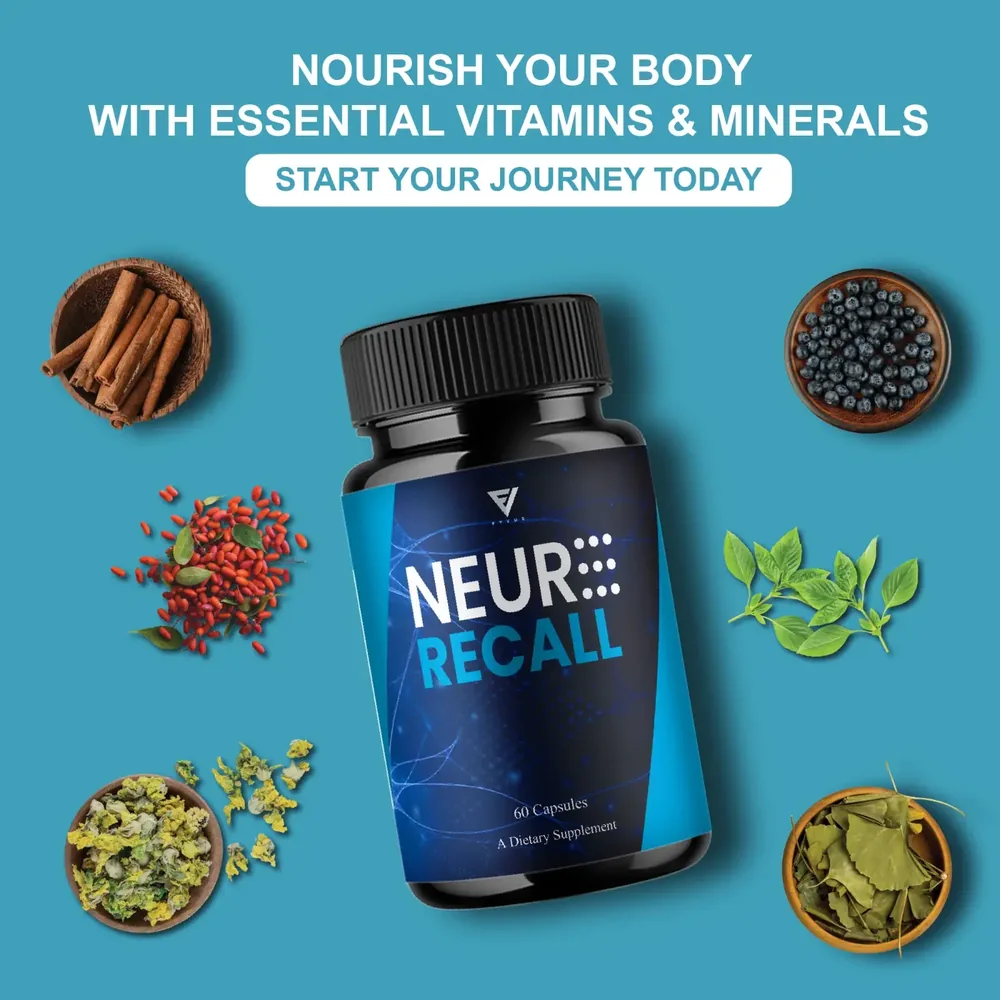
Does it work is the question under every other question. It deserves a straight answer, and the straight answer has two parts: what has been tested, and what has not.
This post goes through seven ingredients with research, compares each with what the label says, and shows what a fair personal test looks like.
Searches for neuro recall results ask the same thing in other words. Read on for what the evidence does and does not say.
Key facts at a glance
- Neuro Recall has never been studied as a finished product.
- Seven ingredients have studies at known doses: B12, folic acid, ginkgo, bacopa, L-theanine, alpha-GPC, and lutein with zeaxanthin.
- Only B12 and folic acid have printed amounts. The other five sit inside the 635 mg blend with none.
- In bacopa studies, people took it for 12 weeks or more. The ginkgo GEM trial ran about 6 years and found no benefit for decline.
- The label is clear that the product is not intended to diagnose, treat, cure, or prevent any disease.
- New or worsening memory problems need a medical check first.
If a fair test appeals to you, read the guarantee length on the order page before you start.
This site earns a commission when you order through its links. The price you pay does not change.
Has Neuro Recall been tested in people?
No. No study of the product itself has been published, so no result can be claimed for it.
Every claim you read about this exact capsule rests on studies of single ingredients. Those studies used set doses and set lengths of time. The label does not tell us the doses inside the capsule, so we cannot say the studies apply.
This is the same position as for many supplements. It is not a flaw only of this one. It is a reason to read results with care, whoever sells the product.
What are the seven dose gaps?
For each ingredient we set the label beside the dose used in studies. Where the label is silent, we say not published.
| Ingredient | Neuro Recall label | Dose used in studies | Share |
|---|---|---|---|
| Vitamin B12 | 240 mcg | About 500 to 1,000 mcg a day (a benefit seen only in people who are low) (NIH ODS, Vitamin B12 (health professional)) | 48% of the lowest |
| Folic acid | 320 mcg folic acid, which is 600 mcg DFE | About 400 to 2,500 mcg a day (Cochrane, Folic acid with or without B12 for cognition) | 80% of the lowest |
| Ginkgo biloba | Not published | 240 mg a day, about 6 years (JAMA 2009, Snitz et al., GEM cognitive decline trial) | Cannot be worked out |
| Bacopa monnieri | Not published | 300 to 450 mg a day, 12 weeks or more (J Ethnopharmacol 2014, Bacopa meta-analysis of RCTs) | Cannot be worked out |
| L-theanine | Not published | 50 to 400 mg, often 200 mg, short term (Nutr Rev 2025, Payne et al., tea and L-theanine meta-analysis) | Cannot be worked out |
| Alpha-GPC | Not published | 1,200 mg a day, only in people with dementia (Alzheimer's Drug Discovery Foundation, Alpha-GPC) | Cannot be worked out |
| Lutein + zeaxanthin | Not published | 10 mg + 2 mg a day for 12 months (Nutrients 2021, Yagi et al., Lutein and brain health) | Cannot be worked out |
Share means the label amount divided by the lowest studied dose. It can be worked out only where the label prints an amount.
How does Neuro Recall work, ingredient by ingredient?
We describe what each ingredient was studied for. We do not claim that the capsule does the same.
- Bacopa. Small trials found modest gains in attention speed and some recall tasks after 12 weeks or more, and the authors still call for a large, well-designed trial.
- L-theanine. Short trials found small gains in reaction time and attention. The effects were small and the results uncertain.
- Ginkgo. The six-year GEM trial gave 240 mg a day to older adults and found no less decline than placebo.
- B12 and folic acid. They help when someone is low. In people who are not low, B vitamins showed little to no effect on thinking.
- Lutein and zeaxanthin. A year of 10 mg + 2 mg a day changed brain scans. A scan change is not a memory score.
- Alpha-GPC. Only people with dementia have been tested, at 1,200 mg a day. That is almost twice the weight of the whole 635 mg blend.
Notice the pattern. The ingredients with the clearest positive results are the ones whose doses the label hides. That is why no honest summary can say that Neuro Recall works.
What would it mean for Neuro Recall to work?
Decide on your yardstick before you start, or you will pick one afterwards to fit.
Work could mean a lab test score, a change you feel, or a change others notice. These are different, and the first is the only one trials measure. Most of what trials found was small and narrow, such as faster reaction on a task.
If your hope is a large change in memory, the research does not support that for supplements. NCCIH notes the lack of direct evidence that supplements prevent dementia (NCCIH, 7 Things To Know About Supplements and Alzheimer's). If your hope is a steady daily habit that you can judge fairly, that is a goal a bottle can serve.
Who might notice a difference?
Mostly people with a gap that a vitamin can fill, and people who pair the capsules with a new habit.
Low B12 can cause memory loss, and it is treatable. A blood test settles it. If you are low, treatment under a doctor's care is the step that matters, and it may not need this product.
Others may notice a change that comes from the routine itself: a fixed time, a calendar tick and a weekly note. That is a real effect, but it belongs to the habit, not the capsule. Sleep, movement and checking medicines may matter more.
How can you run a fair personal test?
Plan it like a small trial: a start, a measure and a stop.
Check with your doctor
Show the label. Ask about B12 and about your medicines.
Write three tasks
Score them from 1 to 5 on day one.
Take 2 capsules a day
No more, as the back label says. Mark each day.
Re-score at week 12
That is 84 days. Compare with day one and note sleep and any new medicine.
Decide
End the test, or extend it with a new date in the diary. Let the guarantee length printed at checkout shape the choice.
Frequently asked questions
Does Neuro Recall really work?
No study of Neuro Recall exists, so nobody can say. Its ingredients have small or mixed studies at doses the label does not confirm, and ten blend amounts are not published.
Does neurorecall work for memory?
Not shown. Bacopa and L-theanine have small, early studies, ginkgo's largest trial was negative, and B12 and folic acid help mainly when someone is low.
How does Neuro Recall work?
It is a capsule supplement with four printed nutrients and a 635 mg blend of ten ingredients. We can describe what each ingredient was studied for, but not how the capsule performs.
What do the results of ginkgo trials say?
The six-year GEM trial gave 240 mg a day to older adults and found no less decline than placebo. The amount of ginkgo in Neuro Recall is not published.
Why is B12 only 48% of the studied dose?
The label holds 240 mcg of B12. Trials used about 500 to 1,000 mcg a day, so 240 mcg is 48% of the lowest figure. B12 matters mainly for people who are low.
Who should not rely on Neuro Recall?
Anyone with new or worsening memory problems should see a doctor first. It is not a stand-in for care. See a doctor about memory loss, dementia or Alzheimer's disease.
Does NeuroRecall work for memory support?
There is no study of the formula, so no one can promise results. Its ingredients have small or mixed studies, and ten blend amounts are not printed. Judge it by the label and a fair personal test.
How long does Neuro Recall take to work?
The site gives no proven timeline. Bacopa studies ran 12 weeks or more, so short use may tell you little. Take the label serving and ask a doctor if you are unsure.
Our view
Does it work? The only fair reply is that nobody knows, because nobody has tested it. We can say what the parts were studied for, and we can say that the label hides the doses that would let you compare.
If you try it anyway, do it as a fair, written test with a doctor in the loop. And if memory is a worry rather than a hobby, put the doctor first and the bottle second.
Last updated November 27, 2026.
Page check
Written by
Writes and fact-checks every page against the Supplement Facts panel, the back label and public health sources.
Medically reviewed by
Dr. Neelum Aggarwal, MD, Physician
Medical reviewer. Review date: October 16, 2026.
- Last checked October 16, 2026
- Facts from the bottle, the sales page and the sources cited above
- Found an error? Write to [email protected] or read how we check facts